Digital Media, Cultures, and Industries Minor
The Digital Media, Cultures, and Industries (DMCI) minor provides students with a combination of analytical and applied skills training in digital media. Students will develop expertise in digital media topics and skills from a social sciences and critical-cultural perspective.
Courses
This interdisciplinary minor requires students to take a blend of courses from critical-cultural studies and sociological and policy research. It also requires students to take courses in digital media production, including courses that focus on digital video, audio and other applied media skills, providing students with the training needed to be competitive in career pathways in digital media fields.
The minor requires 5 units of coursework that are distinct from CMST major classes; these are CMST 2510 Digital Diversities (4 units) and CMST 35XX Applied Media Production (1 unit).
-
CMST 2500: Media Studies
This course introduces students to three key areas in the field of media and communication: 1) media industries, circulation and the political economy of media; 2) the legacy of British Cultural Studies in exploring identity, resistance, and the active audience; 3) media effects, including quantitative audience reception studies and ethnographic approaches to audience analysis. Students will be encouraged to directly engage with the political, social, cultural, and economic influence of evolving technologies and mediums in our digitally mediated global environments.
CMST 2510: Digital Diversities: Media Production as Social Justice
This course introduces students to a social justice topic (chosen by the professor), theories of visual and audio communication, and basic video/audio production skills. Students demonstrate learning about the topic in short paper assignments and demonstrate production skills in practice projects. These assignments and theories studied inform the creation of a final project—an ethnographic video or audio podcast documentary on the social justice topic.
-
Students select 1-2 of the below course options.
CMST 3520: The Digital Self
Our central question in this course will be: what’s the nature of online identity? In this class, we’ll explore that question through examining: theoretical approaches to self and society, arguments for and against technological determinism, technology’s contested impact on civic engagement and community, and the profound influence of digital marketing and digital marketing research tools on consumers-as-brands.
CMST 3530: Digital Rhetoric
This course focuses on analyzing how technologies alter audience, author, text, rhetorical strategies, message, and channels of communication. Students will become better versed in criticism and consumption of digital texts and media.
CMST 3590: Advanced Topics in Media Studies
-
Students select 1-2 of the below course options.
CMST 3550: Documentary in the Digital Age
This class outlines the evolution of the practices, technologies, and ethics of visual documentation as a means to understand how documentary filmmaking is being changed in and through digital media. The class will move historically through the development of documentary media beginning with early ethnographic films and documentaries. At each point in this history we will reflect on technological, social, and political shifts in filmmaking. Students will be expected to conceive of and execute a short documentary film project in small groups and will be asked to reflect on how their film engages with the theoretical topics discussed in this course. Training on the basics of filmmaking will be provided in class, though students will also be expected to master these skills through practice outside of class.
CMST 3555: Sound Studies: The Podcast
This course will introduce students to cultural, technological and historical understandings of the podcast as an art form and will also cover theories of sound in Media Studies. Students will learn the basics of capturing and editing audio, and crafting stories. And they will display these skills in the final project for the course: a multi-media podcast, designed, planned and produced in groups.
CMST 3590: Project Citizen: Digital Storytelling
In this course, students will examine political divides in America by identifying and interviewing stakeholders in a locale (purview) different from their own to better understand opportunities and possible solutions for a return to more civil discourse. As part of this process, students will develop original video and audio documentary content examining how issues, political and cultural, play in and across different regions and populations in our deeply divided country.
-
Students select 1-2 of the below course options.
CMST 3510: Wires and Empires
In this course, students will first be introduced to key international communications theories and will then be asked to consider whether the introduction of Web 2.0, inexpensive mobile technology, and other recent digital media advances are reinforcing or disrupting existing patterns of globalization.
CMST 3525: Social Media Management
This course explores the origins of social media and how it shapes our interactions with brands, people, and governments.
CMST 3565: Business of Media (IINC)
The course will develop an understanding of the business side of the media industry. We will look at economic models for publications and media companies and consider the future of media and journalism in the digital age. This exploration will be conducted through the lens of power and privilege. Mass communication is described as “one to many” message delivery. In this class, you will also learn about the “one” in that description. The concept of power and privilege in modern society will be infused into an exploration of the firms and people who own and operate media outlets. You will see how that ownership has been consolidated through mergers enabled by changes in laws and regulations brought about through the influence of those firms and people. We will look at efforts to make media egalitarian and the dropping of barriers to entry in the digital age.
CMST 3571: The Rise of Cable News: From CNN to YouTube
This course will trace the cultural, political, and technical development of cable TV news and its prominence in the late twentieth century. The course will also address pre-cable and post-broadcast paradigms to develop a broad historical lens for understanding the influence of policy, technology, and political climate in the creation and performance of news.
CMST 3575: Citizen Media
This course will look at the cultural, political, and technological significance of the rise of “citizen media” and its expression in constructs of ‘alternative media’ ‘participatory culture’ and ‘user-generated.
CMST 35XX: Applied Media Production (AMP)
A 1-unit AMP media production skills course in topics ranging from video production to podcasting. The course will focus on a student’s topic of choice in conjunction with a subject chosen by the professor. Each section will focus on a particular production skill (e.g., audio, video or digital production).
Admission
Adding a Digital Media, Culture & Industries Minor (DMCI)
If you’re interested in adding a Minor in Digital Media, Culture & Industries, please follow these steps:
- Contact the Comm Studies department Associate Chair, Dr. Kyra Pearson (Pearson@lmu.edu), and set up a meetingto learn about the minor.
- After meeting with the Dr. Pearson, if you would like to add the major, contact the Comm Studies Senior Administrative Coordinator, Ms. Lisa (Lugo) Tanaka (Lugo@lmu.edu). She will create a Box folder for your application materials.
- Upload a PDF of your degree audit (no screenshots please!) from the Degree Works program to your Box folder.
- For the next step, please determine which category you fit into, and upload the requested documentation to your Box folder:
-
- If your college GPA is 3.25 or higher, and you have at least 3 semesters leftat LMU and space in your schedule to take the 21 units required for the minor, you do not need to submit any additional materials.
-
- If you are a first-year student in your first semester at LMU OR if your college GPA is lower than 3.25, you also need to submit a personal statement (no more than 3 pages double-spaced). In this statement, you should:
- Share your academic and professional goals as well as your understanding of how the DMCI minor could help you to accomplish these goals.
- Address any challenges you’ve faced in your college coursework that may have negatively impacted your GPA.
- If you are a first-year student in your first semester at LMU OR if your college GPA is lower than 3.25, you also need to submit a personal statement (no more than 3 pages double-spaced). In this statement, you should:
-
- If you have fewer than 3 semesters left at LMU, you may not be able to complete the DMCI minor. You can still apply, but you must submit a detailed graduation plan demonstrating how you would complete the DMCI minor in your remaining semesters at LMU (including summers). You can visit the CFA Advising Center (1st floor of St. Roberts Hall; schedule an appointment here) if you need help creating this graduation plan. Please scan and upload this document to your Box folder.
- The DMCI admissions committee will review your materials, and if you qualify for the minor, you will be notified via email. "Review of applications may take up to 10 business days. During academic breaks – Spring Break, Winter Break or Summer Break for example - a response should not be expected until 10 business days after the resumption of the academic term."
NOTE: Newly admitted internal transfer students must be in residence at LMU (i.e., not abroad) during their first semester in the minor (which is typically the semester after they are accepted into the minor). Any future plans to study abroad must be discussed with Dr. Noyes before transferring and adding the minor.
Stories

Digital Media, Cultures, and Industries Minor
This program is designed to give students an opportunity to create and refine audio, video, and multimedia content, from a social sciences and critical-cultural perspective.
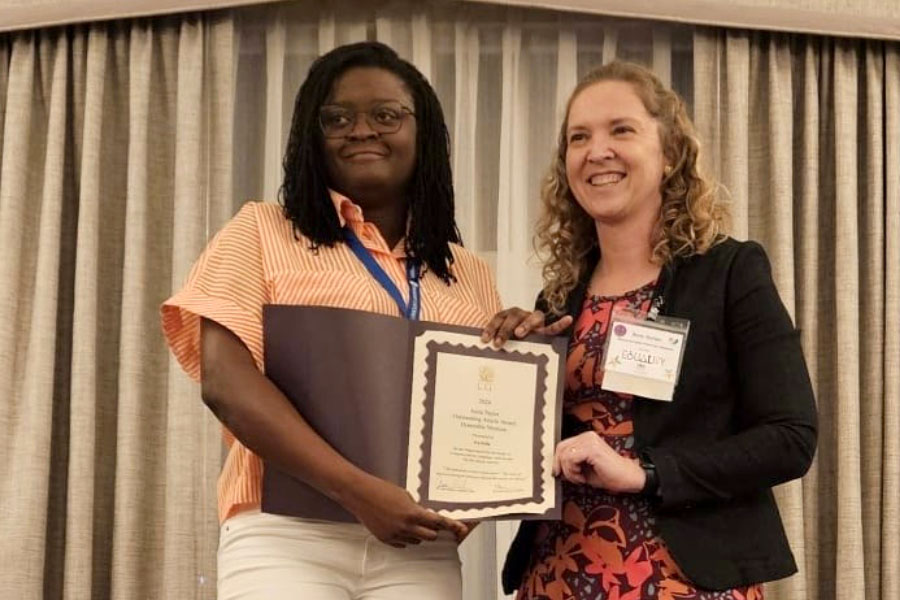
Ivy Fofie Makes Case for Feminist Media, Intersectionality
The lack of female representation inspired Fofie to dig deeper into feminist scholarship.

Award-Winning Author Becomes CMST Assistant Professor
Corrina Laughlin’s scholarship explores how evangelical culture intersects with modern technology.

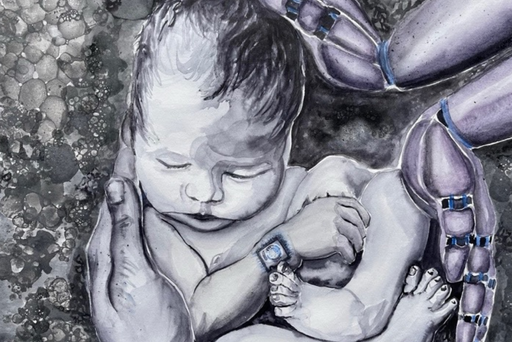
Creative Labor in the Context of AI: Continued Conversations